
When Tidying Feels Like a Battle: Four Positive Discipline Strategies to Get Your Toddler on Board
It’s all fun and games until you remember you have to clean up. If you’ve ever found yourself negotiating with a three-year-old over a pile of books five minutes before friends arrive, you’re in good company.
The good news is that getting little ones to help tidy doesn’t have to be a power struggle. With a few Positive Discipline strategies in your back pocket, you can turn cleanup into something your child actually wants to participate in — and build lifelong habits in the process.
Thanks for reading! Subscribe for free to receive new posts and support my work.
Here are four approaches worth trying.
1. Explain how you need their help.
Children have a deep need to feel significant and capable. When we tap into that need, rather than giving out commands, we’re much more likely to get genuine buy-in.
Try something like: “I need your help keeping our bookshelf tidy so we can play with our friends today. I know you know where the books go. Thank you for putting them back on the shelves.”
If your child isn’t initiating cleanup on their own, that’s okay. You may need to show them how first, guiding them gently through the process — grab a book together, walk it back to the shelf, make it feel doable. The goal isn’t perfection, it’s participation.
2. Make it silly.
Toddlers are wired for play, and the quickest way to get a young child moving is to make the task feel like a game. Lean into the silliness.
“Uh oh, looks like some of our books jumped off the shelf! Quick, let’s get them back in their homes before our friends come over.”
It sounds simple, but a little imagination goes a long way. When cleanup becomes part of the story rather than an interruption to it, kids engage naturally — and often enthusiastically.
3. Make it a challenge.
Kids love to be timed. Even my 8 and 10 year old sons will still go for this on occasion.
“How quickly can you put the books back on the shelves? I’ll get my timer!”
The timer shifts the dynamic from “you have to do this” to “let’s see what you can do.” It adds a little excitement, a little friendly pressure, and a whole lot of motivation.
4. Build a tidying routine chart together.
If cleanup struggles are a recurring theme in your house, a visual routine chart can be a game changer. The key is creating it with your child, not for them.
Sit down together and ask them to walk you through all the steps for tidying their room. Write down each one as they say it. Their ownership of the process makes them far more likely to actually follow it.
It might sound like: “Ok, what do we need to do to tidy our room? Yes, pick up the toys and put them in the baskets — let’s write that down. What about the books? Where do they go? Great, let’s add ‘put books on shelves’ to our chart....”
Post it somewhere visible and refer back to it together. Add pictures for kids who are too young to read. Over time, the chart (rather than the parent) becomes the authority, taking the friction out of the moment.
Cleanup will probably never be your toddler’s favorite activity. But with a little creativity and connection, it doesn’t have to be a battle either. Try one of these approaches this week and tell me in the comments which tools worked for your family.
Teaching Independence Starts Earlier Than You Think
As parents we all think about teaching our children independence and responsibility. During the long, hard days of infancy and toddlerhood, many of us dream of what it will be like one day when they can get themselves dressed, make their own snack and let us go to the bathroom alone. Yet many parents wait until their kids are school age to start teaching and encouraging independence. Kids can start learning and practicing the skill of independence much, much younger, it just might look a little bit different than we typically think.
Babies learn independence by lying on the floor alone for a few moments, gazing at their toes. Toddlers learn to put their blocks back in the basket after playing, which may take many repetitions but eventually they start to do on their own. Preschoolers begin to get themselves dressed and make simple snacks, though neither may be what you would have picked for them if you had made the choice.
When we wait too long to teach independence, it makes it more difficult for both parent and child. We have unintentionally taught our children to rely on us for everything, to be completely dependent. They expect us to do everything for them because we have been doing everything for them. And we get frustrated with their lack of independence because we are burnt out from doing everything. Parents also sometimes think that their children can make a huge jump from almost no independence to suddenly getting themselves dressed and ready for school each morning without much intervention. This is an unreasonable expectation and is not setting them up for success.
When teaching independence, start small and start early. Start with simply picking out the clothes one week, putting on their shirt independently the next and by the end of the month they are getting dressed all by themself. Starting early also takes the pressure off. When a two year old starts is interested in dressing independently, it feels fun and exciting that they are learning a new skill. If a kindergartener is just now attempting to get dressed independently because you do not have time to help them on busy school mornings, the need for independence feels stressful and high stakes.
Think about which independent skills your child would most benefit from working on, either because it is an area where you need help or because they already have the skills and interest in that area. And then encourage, encourage, encourage. Notice their effort. Do not expect perfection. Celebrate the tiny, incremental progress that children achieve in their journey toward independence. And stand by in awe when one day, they do it all by themselves.
This is Not an Emergency
I’m currently teaching a live, online, positive discipline parenting class and the takeaways are as much for me as for the parents participating in my class. During our first class we realized that we are all calm, patient parents, the kind of parents we strive to be, until the moment that things start to feel like an emergency. Now when we think about how often real emergencies occur, it sounds as though we are all parenting exactly how we hope to be nearly all the time. However, our calm, cool and collected parenting doesn’t just go downhill when there actually is an emergency but when things feel like an emergency: a critical distinction.
If you are a parent of young children, you likely know what I’m talking about. When you’re in charge of tiny humans things that feel like an emergency typically start even before breakfast. There’s the wrong color cup that triggers a tantrum, the overstimulation and overwhelm that comes from being asked an excessive number of questions before the coffee has even brewed, and the constant mental weight of being responsible for the health and wellbeing of other human beings.
A misplaced favorite stuffed animal feels stressful and urgent. A misplaced favorite stuffed animal at bedtime? Full emergency mode. Constantly finding lost items, rushing from one thing to the next, the stress of getting yourself and small people who inevitably have forgotten how to put on socks to an appointment on time? It all feels like an emergency and puts our nervous systems in overdrive.
When much of the day to day management of a family feels urgent, it is nearly impossible to be the parent you want to be. When you are stressed, overwhelmed and reacting to what feels like an emergency, you are doing just that: reacting. You are not thinking, planning and proactively addressing the challenges of parenting in the ways you want to.
So if there is one simple but impactful shift to make to your parenting this week, let it be this: the constant reminder to yourself that
this is not an emergency
Very few things are truly an emergency, and yet we treat every day occurrences like emergencies all the time. A tantrum (whether your child’s or your own) feels like an emergency but typically burns out and resolves itself within a few minutes. A lost item will likely be found within a few minutes, and even more quickly if we all remain calm. Not every request needs to be addressed immediately. Not every question answered.
Pause before answering. Take a breath before deciding. You have time. This is not an emergency.
Sometimes my reaction is the worst part
I had a realization this week when I was frustrated with my son’s grumpy mood:
Sometimes my reaction is the worst part.
I chose to react to his grumpiness by also being grumpy. And being grumpy doesn’t feel good! I realized I could just. stop. being. grumpy. I didn’t have to react to his grumpiness with frustration or lectures or more grumpiness. My own reaction is the worst part— then I’m in a bad mood, I think I have to fix everything and I’m certain the whole day is ruined. And guess what? None of that actually stops my child from being grumpy or does anything to prevent it in the future. He’s allowed to be grumpy and I can choose whether or not to react to it.
But this time I noticed it. And I stopped reacting. I stopped mid-lecture and just continued cleaning up the kitchen and eating an extra bite of apple cake.
And I noticed that it was almost like it didn’t even happen. As soon as I stopped reacting, so did he. I modeled being calm and he followed suit. We carried on like nothing had happened because really nothing had.
So my parenting tip for this week is to remember that sometimes your own reaction, your own emotions and your discomfort and that feeling where you think you need to solve every problem because you’re the parent, is the worst part. And it is completely unnecessary. Next time you find yourself reacting about something minor, try to stop in the moment and remind yourself that you don’t have to react. Calm yourself and see what happens.
Our Homeschool Curriculum: A Roadschooling Overview
When we tell people we homeschool our kids while traveling full time they often ask "How do you know what to teach them? Do you use a program?"
Because we roadschool, our approach needs to be flexible, portable, and rooted in real experiences. We want our kids to build strong foundational skills and to see learning as something that happens everywhere—not just at a table with a workbook.
Our homeschool rhythm combines high quality curriculum, real-world experiences, and a lot of unstructured time for our kids to learn through creative play and exploration.
Logic of English: A Strong Literacy Foundation
For reading and spelling, we use Logic of English. This program has been a wonderful fit for our family because it’s:
Explicit and systematic
Rooted in phonics and spelling rules
Supportive for different learning styles
Early reading was a struggle for our oldest, who showed many signs of dyslexia, so we were on the hunt for a phonics-based curriculum that empowers students with dyslexia, giving them the skills and confidence to become effective readers. Logic of English gives our kids clear tools for decoding language, which builds confidence quickly. Even while traveling, it’s easy to pull out a lesson, practice spelling patterns, or reinforce concepts through games and by using the phonogram cards, a set of cards that details every single sound in the English language.
Even as an adult who identifies as a strong reader and has a background in elementary education, I have learned a lot about the English language through this program.
Khan Academy Math: Mastery at Your Own Pace
For math, we primarily use Khan Academy, a free online math curriculum.
What we love most is the mastery‑based approach. Kids can move at their own pace, review concepts when needed, and cruise ahead when they’re feeling motivated. Being a fully online curriculum also means it takes up no space and adds no weight to our travel trailer.
To complement screen‑based learning, we also use Wild Side Number Sense Cards and Beast Academy puzzle books.
Wild Side Number Sense Cards help build strong mental math and number sense through short, playful practice that’s easy to pull out anywhere—perfect for travel days.
Beast Academy puzzle books add depth, challenge, and joyful problem‑solving. They encourage flexible thinking, persistence, and a love of math beyond worksheets.
We pair Khan Academy with real‑life math whenever possible:
Budgeting for groceries
Measuring ingredients while cooking and baking
Distances, travel times and fuel efficiency
Measurements and problem solving involved in trailer repairs and maintenance
Math becomes something they use, not just something they complete.
Branches for Science: Living, Hands-On Learning
Science in our homeschool comes from Branches, a beautiful curriculum created by Busy Toddler founder Susie Allison. What drew us to Branches is how it weaves exploration, nature, and curiosity with intentional, thoughtful structure. Susie’s approach emphasizes observation and playful investigation, making science feel alive and accessible even when we’re on the road.
Branches encourages:
Experiments that grow out of real questions
Observation and wonder as central habits of a learner
Discussions that stretch thinking and build scientific confidence
Integrates scientific concepts with rich language, poetry, reading comprehension, grammar and art
We often adapt lessons to match our travel plans. We are currently studying the Animal Adaptations unit while staying in the San Diego area so we can pair it with multiple visits to the San Diego Zoo and San Diego Safari Park. Branches gives us a flexible framework that honors the questions that naturally emerge from our travels.
Field Trips as Curriculum
Field trips aren’t an “extra” for us—they** are a core part of our homeschool.
Museums, national parks, historical sites, cultural and visitor centers, ranger talks, zoos, aquariums, farmers markets—these experiences form the backbone of our learning.
Instead of trying to replicate school at home, we ask:
What can we learn by experiencing this place together?
What questions does it spark?
How can we connect this experience to reading, writing, science, math and history?
Our "field trips as curriculum" approach is what inspired us to create Roadschool Atlas in the first place.
Roadschool Atlas: Writing to Capture Learning
We created Roadschool Atlas because we wanted a meaningful way for our kids to process and reflect on what they experience.
Roadschool Atlas is where our kids:
Write about field trips and travel days
Record observations and reflections
Practice narration and storytelling
Connect learning across subjects
Writing becomes purposeful because it’s grounded in lived experience. Instead of generic prompts, our kids are writing about places they’ve stood, things they’ve touched, and moments that mattered.
We’re currently working on expanding this into the Roadschool Atlas Projects, designed to help families turn travel and field trips into cohesive, thoughtful learning projects.
Brave Writer: Writing Inspired by Julie Bogart
Our writing approach is heavily inspired by Brave Writer, founded by Julie Bogart. Her book Help! My Kid Hates Writing changed our approach to writing, inspiring us to focus on daily low-stakes free writes to increase our kids confidence, stamina and creativity when it comes to writing.
We occasionally use the Dart curriculum to enrich our experience of family read alouds and combine reading comprehension with grammar, vocabulary and writing structure.
We are also planning on using the Partnership Writing curriculum more the second half of this homeschool year and are looking forward to diving into this set of creative writing projects that parents and children work on together.
We focus on:
Gentle structure
Strong models of good writing
Collaboration and conversation
Honoring each child’s voice
For writing we emphasize process—talking, thinking, revising, and growing confidence over time. Writing often grows out of shared experiences, read‑alouds, and reflecting on field trips and travel.
Typing Skills with EdClub’s TypingClub
We also include typing practice as part of our homeschool rhythm using EdClub’s TypingClub program. TypingClub is a web-based keyboarding curriculum that guides kids through structured lessons to build touch-typing skills, helping them type with confidence, speed, and accuracy.
TypingClub works well for us because it:
Is self-paced, so kids can log in and work at a rhythm that fits their day.
Includes a wide range of lessons—from beginners learning letter placement to advanced touch-typing practice.
Gives real-time feedback on speed and accuracy, which helps them track progress and set goals.
We focus on short daily practice sessions to build lasting keyboard fluency that will serve them in writing, research, and creative projects.
Free-Form Art: Creativity Without an Agenda
Art in our homeschool is intentionally free-form. While our kids have taken a handful of in-person and online classes through Studio Sprout, we don’t follow a formal art curriculum most of the time. Instead, we make space for creativity to emerge naturally through materials, time, and freedom.
Our kids regularly engage in:
Drawing and sketching
Watercolor painting
Making paracord and beaded bracelets
Our art supplies are always accessible and take up a significant portion of the overall storage space in our travel trailer. This kind of open-ended creativity supports fine motor skills, expression, confidence and has inspired both of our sons to become entrepreneurs—they both create and sell their art to neighbors and friends and at local kids markets when we have the opportunity to be part of one.
We see art not as a subject to master, but as a language—one our kids can return to again and again to process and reflect on their experiences, unwind, and create something that feels uniquely theirs.
Our Philosophy: Structure + Freedom
At its heart, our homeschool is a balance between child-led exploration and structured lessons to create a strong foundation of academics.
We believe in:
Strong foundational skills
Deep, meaningful experiences
Following curiosity
Allowing learning to unfold over time
Curriculum is a tool—not the goal. Our goal is curious, capable kids who know how to learn, ask questions, and engage with the world around them.
If you’re building your own homeschool or roadschool rhythm, I hope this gives you ideas—and permission—to blend structure with wonder.
Learning doesn’t have to be confined to one place. Sometimes the best classroom has wheels. 🚐✨
How to Connect With Your Child This Week
Cook Together
Put your child in charge of planning the menu and work together to make it happen.
Go for a Walk
Fresh air and simple conversation can lead to meaningful moments.
Create Something
Draw, craft or build something together.
Read Together
Pick a favorite book and take turns reading aloud.
Work on a Puzzle
Find the joy in working toward a shared goal.
Listen without Interrupting
Let them share their thoughts fully before responding.
Plan a Surprise
An unepected note, treat or outing together.
Bedtime Gratitude
End the day by sharing one thing each of you is grateful for.
Small moments build strong bonds. Connection grows through presence, not perfection.
The Best Parenting is Proactive Parenting

The best parenting is proactive parenting. Whatever parenting challenge you are facing right now, think about how you can address it proactively (before it occurs), rather than reactively (after it occurs). This means before the tantrum, before the mess, before the sibling conflict, before trying to get out of the house.
Reflect on what the issue is and how you can get ahead of it.
Transitions tend to trigger tantrums? Give your child an overview of the day in the morning so they know what to expect.
Kids whining and asking for a toy in the grocery store? Discuss expectations for behavior and set clear boundaries about not buying a toy before walking into the store.
Take the time to discuss and problem solve with your child when everyone is calm and receptive. In the moment when we are upset and overwhelmed is not the time to decide on how to best handle a situation. A proactive conversation encourages both parents and children to be thoughtful and creative when looking for solutions and reinforces the feeling of being on the same team, problem solving together. Your child will likely have some brilliant ideas and will feel empowered and capable when you ask them to help come up with a creative solution.
How will you parent proactively this week?
Winter Home Refresh
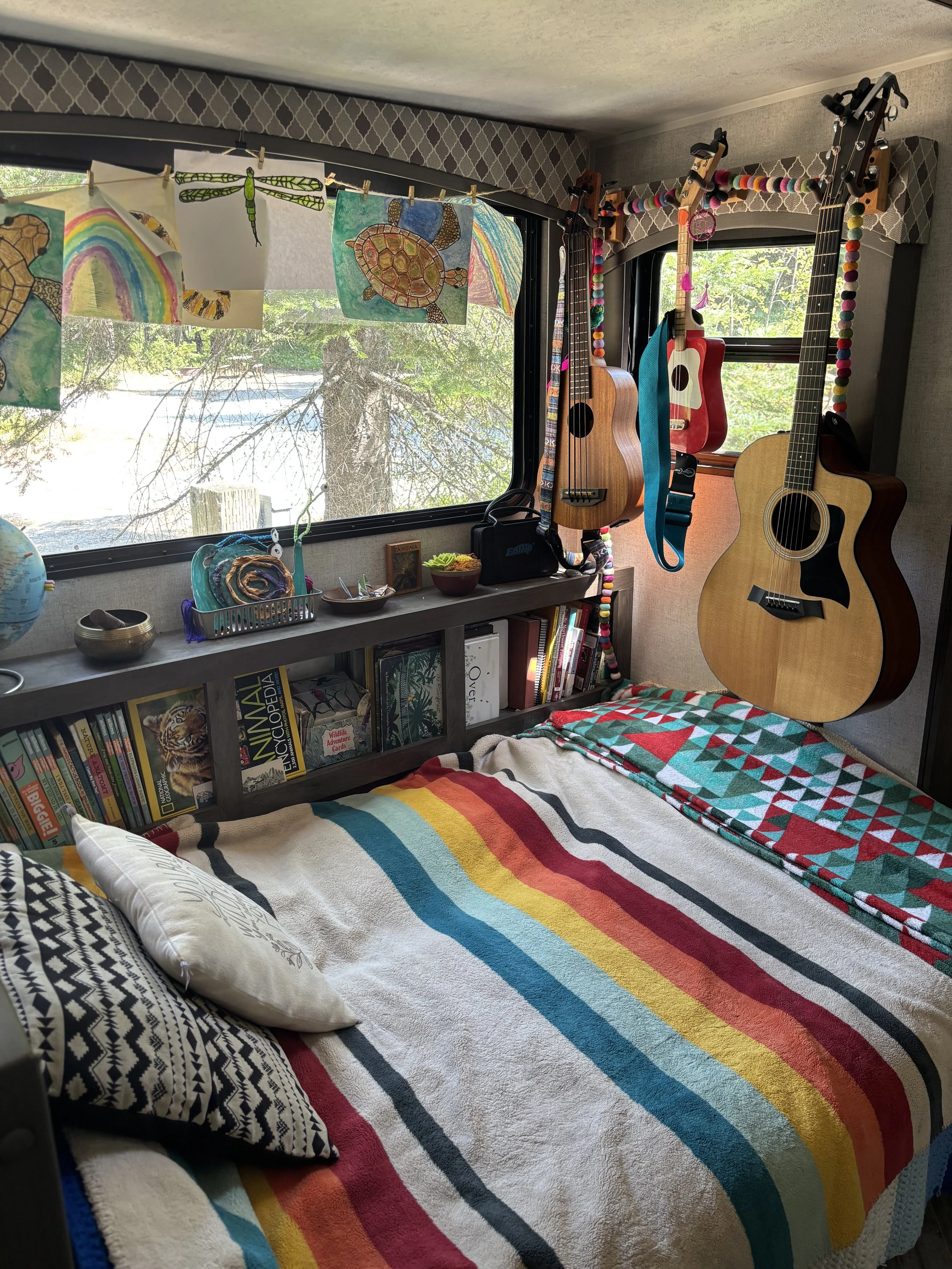
Every year after Christmas winds down, my friends and I start talking about the calm and delight of an annual “Winter Home Refresh.” After the decorations, chaos, and messy magic of the holidays, a winter home refresh resets your space and prepares for the new year. Putting away new presents and storing holiday decor until next year is just the beginning of a winter home refresh and can often create momentum that inspires us to reset, refresh and rethink our space.
This list is just a start for your own winter home refresh. Add in anything you feel inspired to do in the new year to reset your space.
Put away new presents
Organize and pack away holiday decorations
Discard broken holiday decorations
Take a break from grocery shopping to use up food in fridge and pantry
Take inventory of pantry and food storage. Make a list of what NOT to buy when you discover you already have 15 cans of tomato paste and 20 pounds of rice.
Sort through closets and donate unwanted clothing
Deep clean bathrooms and kitchen
Sweep and mop floors
Reorganize drawers, cabinets and bins
Create thoughtful spaces that support new year goals: a meditation and yoga space, reading corner, or an intentional space for daily journaling
What is Positive Discipline?
Positive Discipline is both deceptively simple and completely transformational.
Positive Discipline focuses on five main criteria:
Helps children feel a sense of connection and belonging
Is effective long-term
Is mutually respectful and encouraging
Teaches life skills
Empowers children to see how capable they are
When children feel connected and significant in their families they want to contribute and explore their own capabilities. Positive Discipline focuses on finding long-term solutions, emphasizing solutions over punishment. While punishment-based discipline can be effective in the short term it does not teach life skills and social skills and does not invite children to be part of a long-term solution. Positive Discipline encourages mutual respect: parents respect children and children respect parents. Parents and children are a team that work together, with the parent leading the way and holding kind AND firm boundaries as needed. When we see our children as capable, they see themselves as capable and are empowered to contribute, learn and grow.
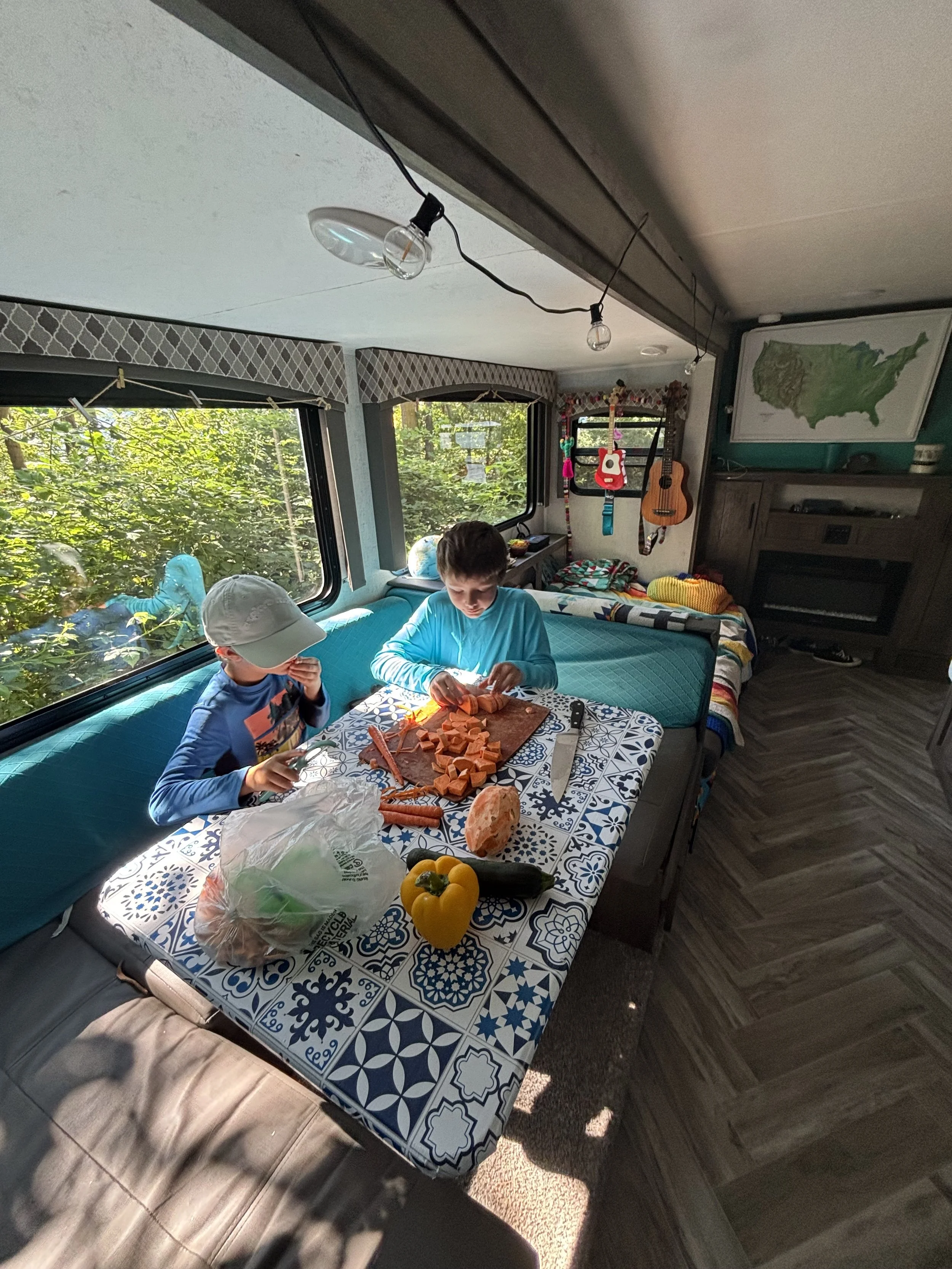
If you want your kids to do more, do less.
Most parents I talk to want their kids to be more responsible, more independent, and to take initiative. And while many parents want to see these behaviors in their kids they don’t show it through their actions. What I mean is that parents continue to do things for their children that their children are capable of doing themselves and yet they are surprised when their children aren’t more independent.
When parents do tasks for their children that they can do for themselves, they are teaching them to be dependent, the exact opposite of the responsible and independent traits parents are hoping to instill in their children. Parents are also inadvertently teaching their children that their parents do not think they are capable of completing these tasks on their own.
In Positive Discipline we discuss how all children seek out belonging and significance. Children feel significant when they feel capable of contributing to their family. Feeling significant and capable encourages and empowers children to be more independent and responsible. But when parents continually pick out their kids clothes, put their shoes on their feet, pack their lunches, and clean up their toys, they take away the opportunity for them to practice independence and to gain confidence and competence.
So if you want your kids to start doing more, start by doing less.

Modeling Gratitude is One of the Best Things You Can Do for Your Kids… And Your Marriage.
We all want grateful kids: kids who say thank you to their grandparents for birthday gifts without being prompted, remember to thank their friends for coming over to play, and who express gratitude when their parents help them with a tricky math problem or cook their favorite meal. In fact, I think we’d all like to have kids who can express gratitude even when it isn’t their favorite meal.
But contrary to popular practice, nagging kids to say “thank you” is not the most effective way to raise grateful kids. Modeling gratitude is the key to raising grateful kids. Telling kids to be grateful is one thing, showing them what gratitude looks like by practicing and expressing it yourself is far more effective.
Modeling gratitude for your kids means making gratitude a habit for yourself first. Start small and soon you will notice just how many things you have to be grateful for. Thank your family for everything they are doing that is helpful and kind. Thank your kids for unloading the dishwasher, bringing their backpack in from the car and grabbing a jacket on a chilly morning. Thank your partner for taking out the trash, filling the car with gas, and buying more toothpaste.
When gratitude becomes a habit, you start looking for more things to be grateful for. You notice the kindness between siblings when they decide to split a cookie and you thank them and tell them how proud you are that they have learned to share so well. You notice the one morning that your child ties their shoes on their own and doesn’t need to ask for help. You notice the colors of the changing leaves and the thoughtfulness of a stranger holding the door. By practicing gratitude and modeling gratitude you become more grateful.
When your children hear you thanking them for clearing the plates after dinner, they are inspired to thank you for cooking it. When you thank them for brushing their teeth without being asked, they may thank you for reading them a book at bedtime. When you thank them for spending a weekend afternoon riding bikes together, they may feel inclined to tell you the same.
Teaching your kids to show and express gratitude is not the only positive impact of modeling gratitude. Practicing a habit of gratitude has a hugely positive effect on your marriage or partnership. Everyone wants to feel appreciated in a relationship and with the sheer amount of work it tasks to raise a family and run a household, it is easy to feel unappreciated or taken for granted at times. Telling your partner “thank you” and expressing gratitude on a regular basis shows that you appreciate all they do and, again, models for your children how important gratitude is in a family.
Expressing gratitude within a partnership makes your partner feel seen for all the “invisible work” that all of us parents do to make our households run smoothly. It can be easy to just assume that your partner will do the grocery shopping or pack the lunches or mow the lawn like they always do and to forget to even say anything about it. Saying “thank you” only takes a few seconds and it goes a long way in making your partner feel appreciated. And they might even be inspired to thank you back.
This week’s challenge is to thank each person in your family for something every day. Notice one small thing they do each day and thank them for it. Start building the habit of gratitude and watch how modeling it for your family has a much greater impact than simply telling your kids to say please and thank you.
Thank you for reading. I’m grateful you are here.